

 Vest Markets
 E8 Perpetuals
 For Traders
 Upcomers Perpetual
 Apex Trader Funding
 4PropTrader
 Alpha Futures
 Blue Guardian
 Boxcar Trading
 BrightFunded Futures
 Bulenox
 Crest Futures
 Day One Funded
 Earn2Trade
 Finotive Futures
 FTMO Futures
 Funded Futures Network
 FundedHero
 FundedNext
 FundedPilot
 FundYourEdge
 Futures Elite
 Hola Prime
 Lucid Trading
 MyFundedFutures
 Phoenix Trader Funding
 PropShop Trader
 Shark Futures
 TakeProfitTrader
 The Trading Pit
 The5ers
 Top One Futures
 Topstep
 Tradeify
 TX3 Funding
 Voltra Funding
 Ylos Trading
 TradeDay
 BluSky Trading
Futures Trading With Bollinger Bands
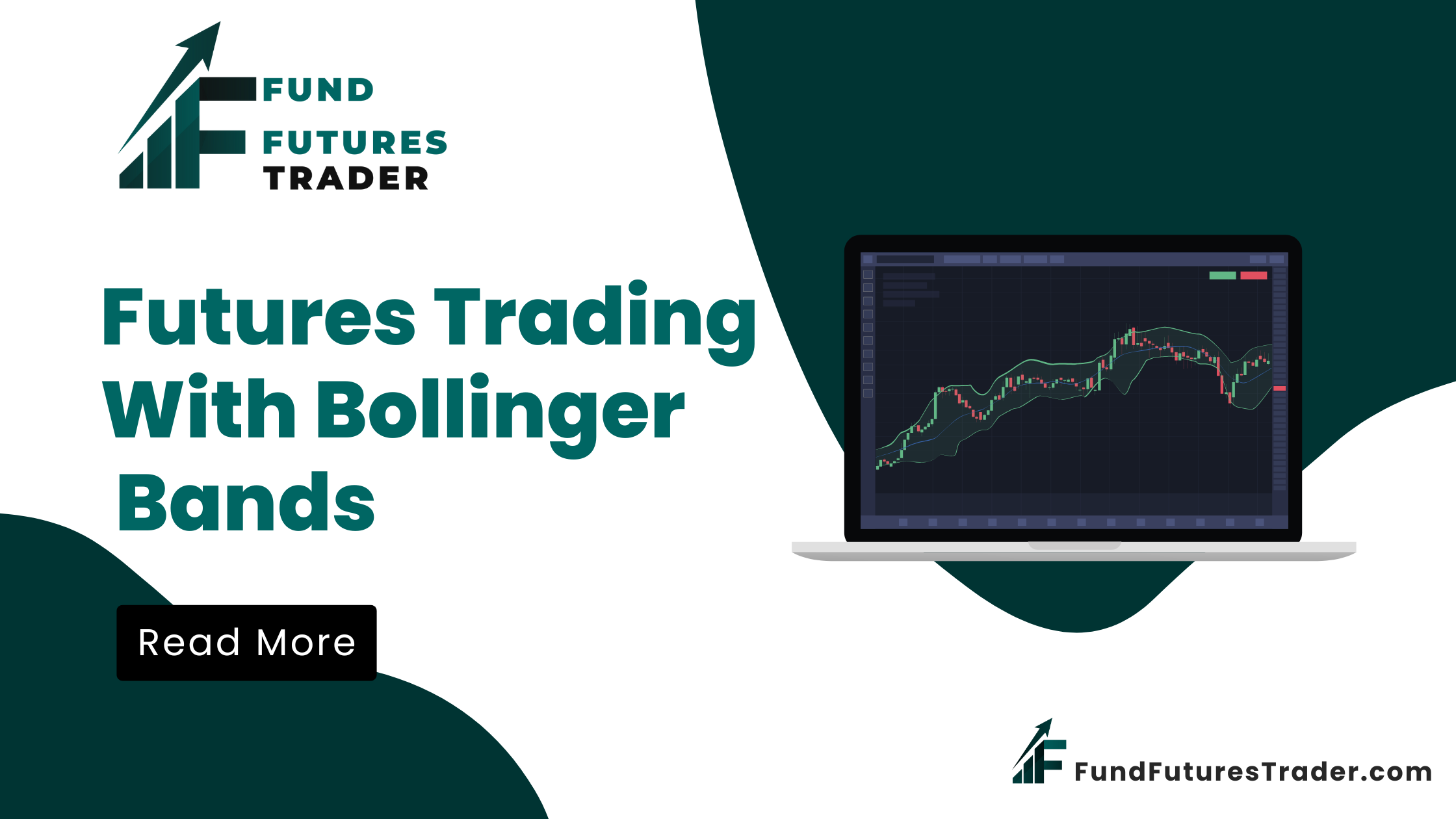
Bollinger Bands (BBs), developed by market technician John Bollinger in the 1980s, are a popular indicator used by traders all over the world. Bollinger claims that the purpose of BBs is to provide a straightforward confirmation regarding the relative relationship of price values.
They are intended to serve as an “envelope” of changing price movement. Every set of BBs has a midpoint, lower band, and upper band—the criteria used to contextualize price.
Breakout Trading Using BBs
The ability of BBs to assist traders with market entry is among its strongest features. When it comes to identifying breakouts, or abrupt price movements, they are particularly helpful in anticipating and entering a sudden directional move.
BBs indicate an impending breakout by displaying a smaller bandwidth, in contrast to the seemingly open appearance of moving markets. In essence, a market is compressing when the upper and lower bands are “tight.” Prices may make a significant directional shift if they break outside the BBs.
Assume that June WTI crude oil futures are trading in an extremely tight fashion ahead of the weekly EIA inventories report. WTI’s price has a lower BB of $49.25 and an upper BB of $50.00 based on a 30-minute chart. The Bollinger Bands approach listed below could be used to trade a breakout:
- Keep an eye on the price movement for rejections and tests of the upper or lower band. A level’s relevance increases with the number of rejections.
- If several tests are unsuccessful, it might be beneficial to buy or sell. This can be executed by placing a stop market or stop limit buy-sell order at $50.01 or $49.24.
- It is important to keep stop losses and profit targets modest due to the short time frame. These risk management strategies include momentum scalping using multi-bracket orders or employing a risk vs reward ratio of 1:1 or 1:2.
Trading Trends With BBs
A recurring, directional shift in price activity is called a trend. All time frames—intraday, day, week, month, and annual horizons—see trends. There are two ways that Bollinger Bands assist traders in identifying trending markets:
- Wide Band Gaps: Higher pricing volatility is indicated by a longer or “wide” gap between the upper and lower bands. Wide bands show that the price is moving up and that trading conditions are favorable.
- External Close: The likelihood of a trend extension is indicated by a periodic closure above an upper band or below a lower band.
It’s crucial to pay attention to the spacing between bands and the closing locations of pricing bars when trading trends with a Bollinger Bands technique. For example, suppose that a daily increase in CME December corn futures has been caused by springtime flooding in the Midwest. A trader could employ BBs in the following ways to profit from the bullish trend:
- Observe the distance between the top and bottom bands. Increased pricing volatility and favorable circumstances for trend extension are indicated by extended bands.
- Put an order to purchase December corn when a daily close above the top band is posted. Stop loss orders might be positioned under the low of the preceding day or week, the BB midpoint, or Fibonacci retracement levels.
Using BBs to Profit from Rotational Markets
A market that is “range bound” and lacks direction is called a rotating market. The best instruments for determining range-bound items are the BBs. Market consolidation is indicated by a narrower or “tighter” gap between the upper and lower bands.
In essence, using BBs to trade rotating markets means interpreting the outer bands as levels of support or resistance. A trader positions himself against the price action from these levels, hoping for a return to the BB’s middle.
The following is the WTI scenario above (upper band at $50.00 and lower band at $49.25) applied to this trading strategy:
- Sell orders should be entered at $50.00 or right below $50.00.
- Purchase orders should be entered at $49.25 or just above $49.25.
- The most effective strategy for trading rotating markets is to use cautious profit objectives and stop losses. Furthermore, it’s a good idea to apply a risk-reward ratio of at least 1:1.
Conclusion
Bollinger Bands are a powerful tool for futures traders, offering strategies for trading trends, breakouts, and rotational markets. Their unique ability to illustrate volatility and price levels gives traders a versatile way to respond to both trending and consolidating markets. By understanding the behavior of bands and using techniques aligned with market conditions, traders can make informed decisions and manage risk more effectively.